
The Next Phase of the
Indigenous Economic Development Community of Practice
Engaging, Supporting, and Mobilizing the Next Generation of Native Economic Development

Research, share knowledge about and build tribal capacity to conduct economic development and planning activities
A Native-led Advisory Committee will bring together tribal economic development organizations, colleges and universities, leaders and professionals who contribute their expertise and knowledge
Foster deep hands-on learning, address systemic barriers, connect students, professionals and organizations, expand research and resources, and produce practical tools, networks and policy insights to support sustainable tribal and Native community economic development
GET INVOLVED TODAY
-
The Indigenous Economic Development Community of Practice (CoP), a knowledge-sharing project funded by the Economic Development Administration (EDA) and coordinated by Urban Institute, Big Water Consulting and the National American Indian Housing Council, launched in early 2024. The CoP’s community members are tribal and Native economic development professionals, and the community also includes a “resource group” made up of professional consultants and service providers, academics and researchers, agency staff, and others who serve tribes, tribal enterprises and Native entrepreneurs.
This first phase of the CoP provided a core set of resources, including:
A website sharing a vast array of helpful resources, such as examples of successful economic development projects or stacking of available funding sources, relevant research, and the names and contact information of session presenters and subject matter experts in a wide variety of fields.
A monthly series of virtual sessions covering an array of tribal economic development topics including energy, tourism, health and human services.
A two-tiered training series that covered the economic development planning and plan implementation process from assessment of the community’s workforce and infrastructure to participation in regional economies and global commerce.
A set of three pre-event workshops at National American Indian Housing Council conventions and legal symposiums utilizing planning principles and techniques to illustrate the inextricable link between housing and economic development activities under the larger umbrella of ‘community economic development.’
By the end of the first phase of the CoP in June 2025, membership in the CoP had grown to over 1,100 members nationwide.
Purpose of the Next Phase of the CoP
As the first phase of the CoP comes to a close and we move into the next phase, the administrators/coordinators of the CoP propose to:
1
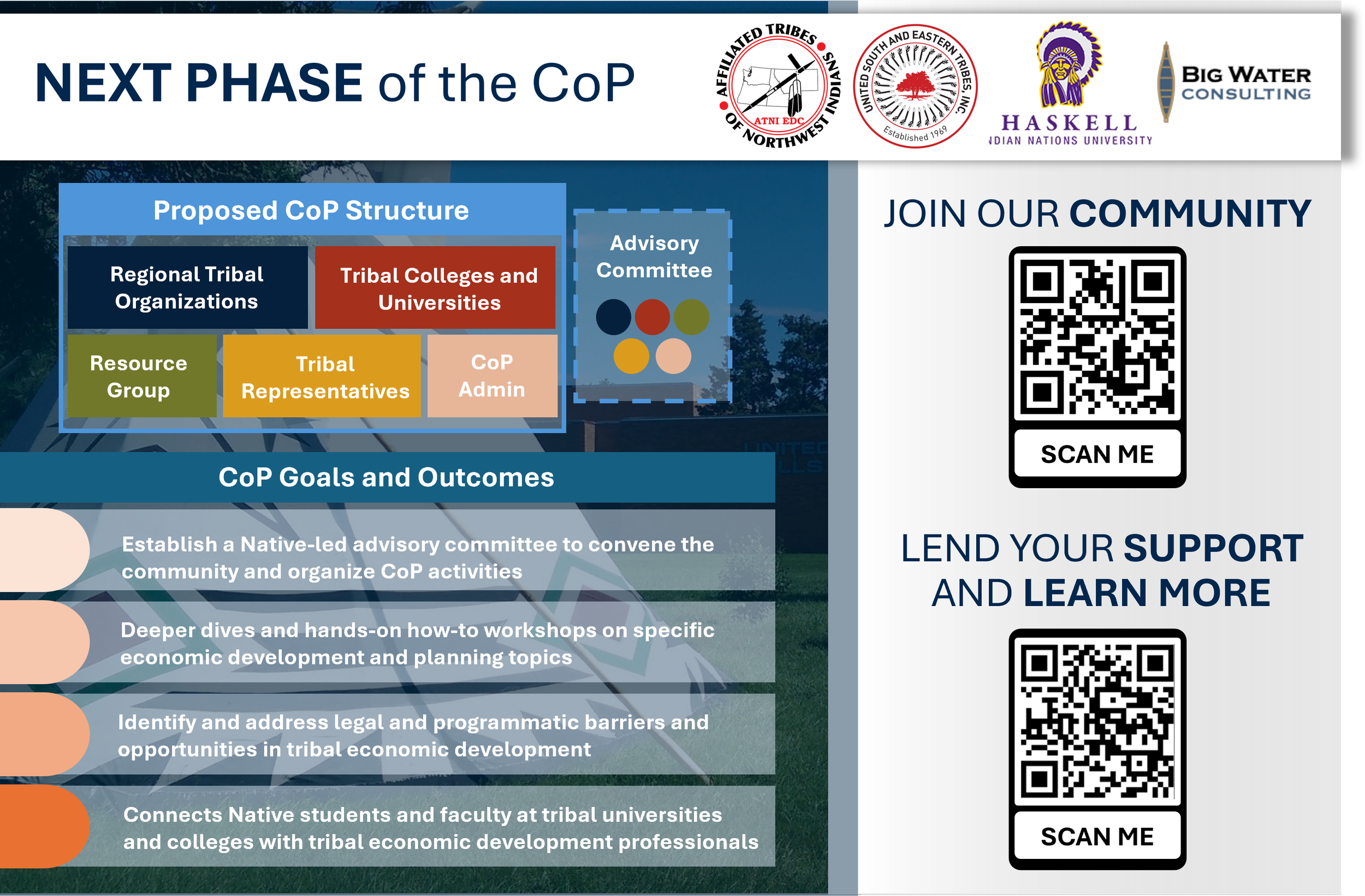
Establish a Native-led Advisory Committee, including, but not limited to, the staff of regional and national tribal economic development organizations, tribal colleges and universities, and tribal leaders as well as tribal economic development professionals from around the country
2
Shift from broad coverage of economic development topics to deeper dives and hands-on how-to workshops on specific economic development and planning topics (potentially through cohorts, working groups, topical virtual sessions, or committees)
3
Work with community members to identify and address legal and programmatic barriers and opportunities in the local, state, federal, inter-tribal, and public-private spaces
4
Provide a platform and venue that connects Native students and faculty at tribal universities and colleges with tribal economic development professionals, Native entrepreneurs, and CoP Resource Group members throughout the country for the purpose of:
Supporting tribal/Native economic development with robust Native-led research by developing and maintaining a portal of relevant research topics populated by the Advisory Committee members and CoP members
Providing useful and directly relevant research and research presentation opportunities for Native students and faculty
Showcasing the talents of Native students and young professionals for an audience of potential employers
Broadening and strengthening the network of Native professionals supporting each other’s community economic development journey
5
Engage and include (rather than compete with, duplicate the efforts of, or simply operate parallel to) other tribal, statewide, regional and national organizations supporting and advancing the economic development efforts of tribal and Native communities to complement and support their programs and initiatives and avail community members of the resources that they offer
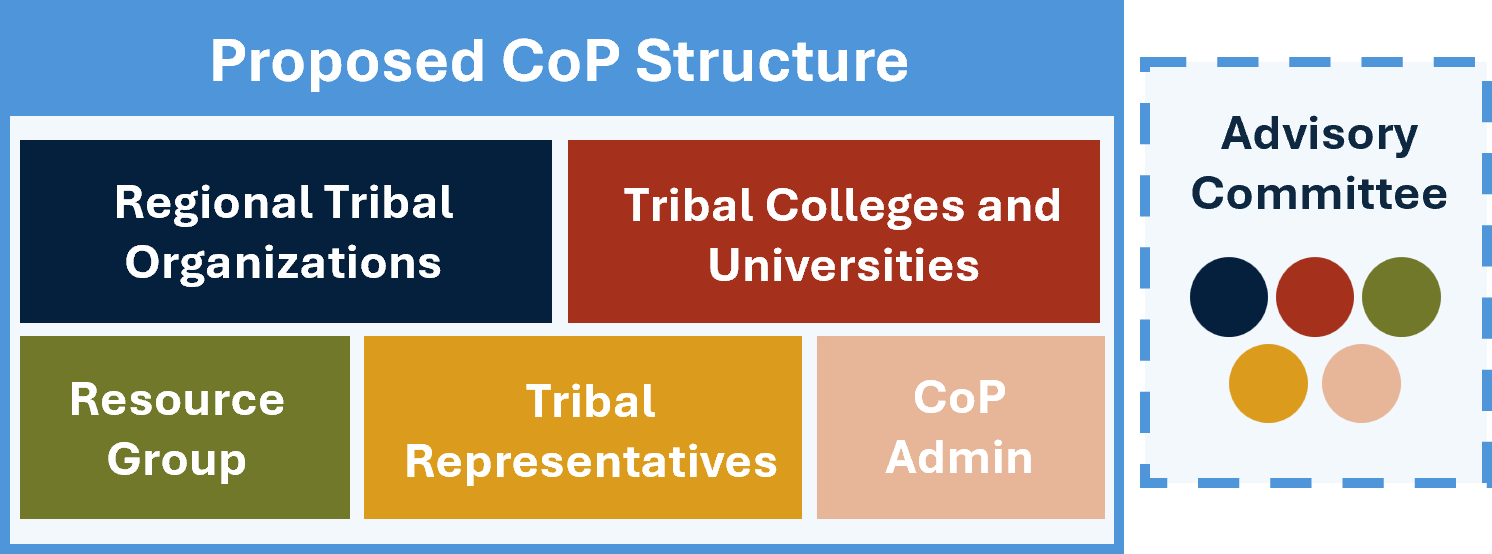
Proposed Structure of the Next Phase of the CoP
Initial Advisory Committee Member Organizations and Institutions

Goals and Desired Outcomes for the Next Phase
The activities facilitate by the CoP are intended to uplift Indigenous/tribal/Native communities and economies and provide the opportunity to:
1
Identify, map, and continue to expand the tribal/Native economic development landscape
2
Grow and make readily accessible the body of research necessary to support tribal and Native economic development
3
Develop adaptable but substantive road maps and toolkits for economic development processes (including funding identification, capital stacking, colocation of facilities and systems, and partner/network building) for tribal and Native communities
4
Capitalize on the collective knowledge of the community members to develop white papers, policy briefs, and other tangible deliverables that summarize barriers/challenges, identify opportunities
Interested in supporting the sustainability of the
Indigenous Economic Development Community of Practice?
Fill out the Funder and Supporter Interest Form to tell us about your organization, your areas of interest, and potential contributions to support CoP activities.