Ken Ahmann - Colusa Indian Energy says:
This is an excellent and often overlooked question when developing energy projects for Tribes. Sometimes, Tribal Councils, Executives, and other elected Tribal leaders are the first and final say with our developments. Other times, we are directed to consult the general Tribal membership more broadly via townhalls, surveys, and other community engagement efforts.
Related Past Events:
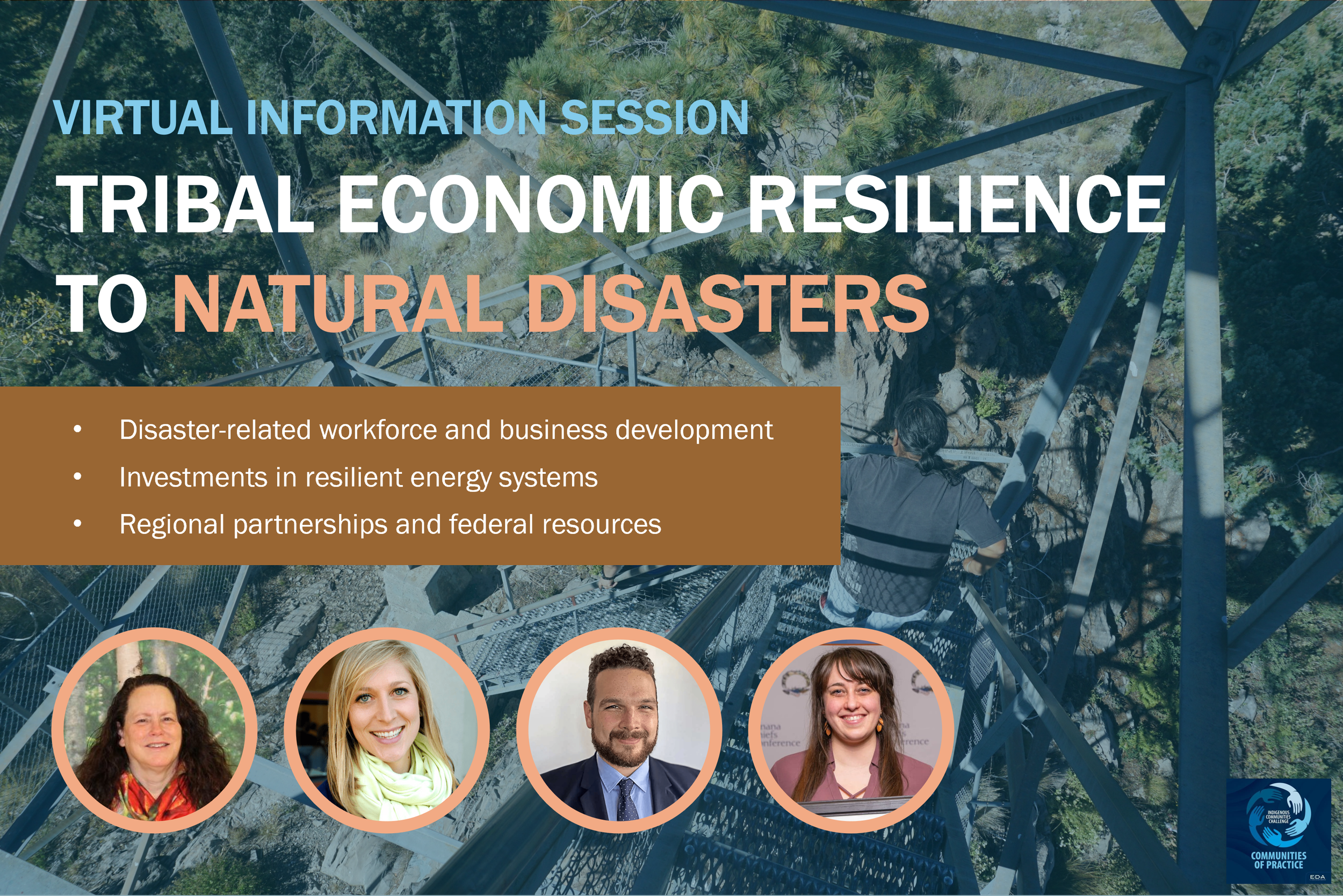
This 90-minute session featured a panel of experts who explored how tribal/Native communities can approach hazard mitigation planning and disaster preparedness as opportunities to build stronger, more resilient economies. By reviewing project examples, the audience learned about how disaster-related projects can create workforce and small business development opportunities; how investments in resilient energy systems can keep homes, businesses, and community facilities operating during and after disasters; and how regional partnerships and federal resources can advance both hazard mitigation and economic development in tribal/Native communities.
Broadband and telecommunications, are sectors that represent areas of significant infrastructural need with tribal and Native lands, provide tremendous current opportunities for significant funding, and offer fertile ground for new partnerships with non-Native entities and governments.
As tribes work on projects to grow and improve their communities, it is essential that all the various sectors of community economic development are involved in the conversation together through a holistic planning process.